Omnichannel CRM for B2C Brands: Complete Playbook
CRM

Arpit Agrawal
Chief Executive Officer

TL;DR: For B2C brands in India and the UK, customers communicate across voice calls, messaging apps, Instagram, email, and web chat. An omnichannel CRM connects all these channels to your customer data and automations, enabling AI agents to handle sales, support, and remarketing at scale. This guide covers setup, use cases, and how to choose the right platform.
Why Omnichannel Is the Most Important Strategy for B2C in 2026-27
B2C customers don't stick to a single channel. They call, they message, they email, they DM on Instagram. The data speaks clearly: messaging apps have a 98% open rate vs 20% for email. Voice calls remain the highest-trust channel for complex queries and high-value transactions. Instagram DMs are the fastest-growing inbound channel for D2C brands. And response rates on conversational channels are 5 to 10x higher than email or web forms.
Yet most B2C businesses are still managing each channel separately: a single phone for calls, a basic bot for chat, manual responses on Instagram. This fragmented setup collapses under any meaningful volume.
What Is an Omnichannel CRM?
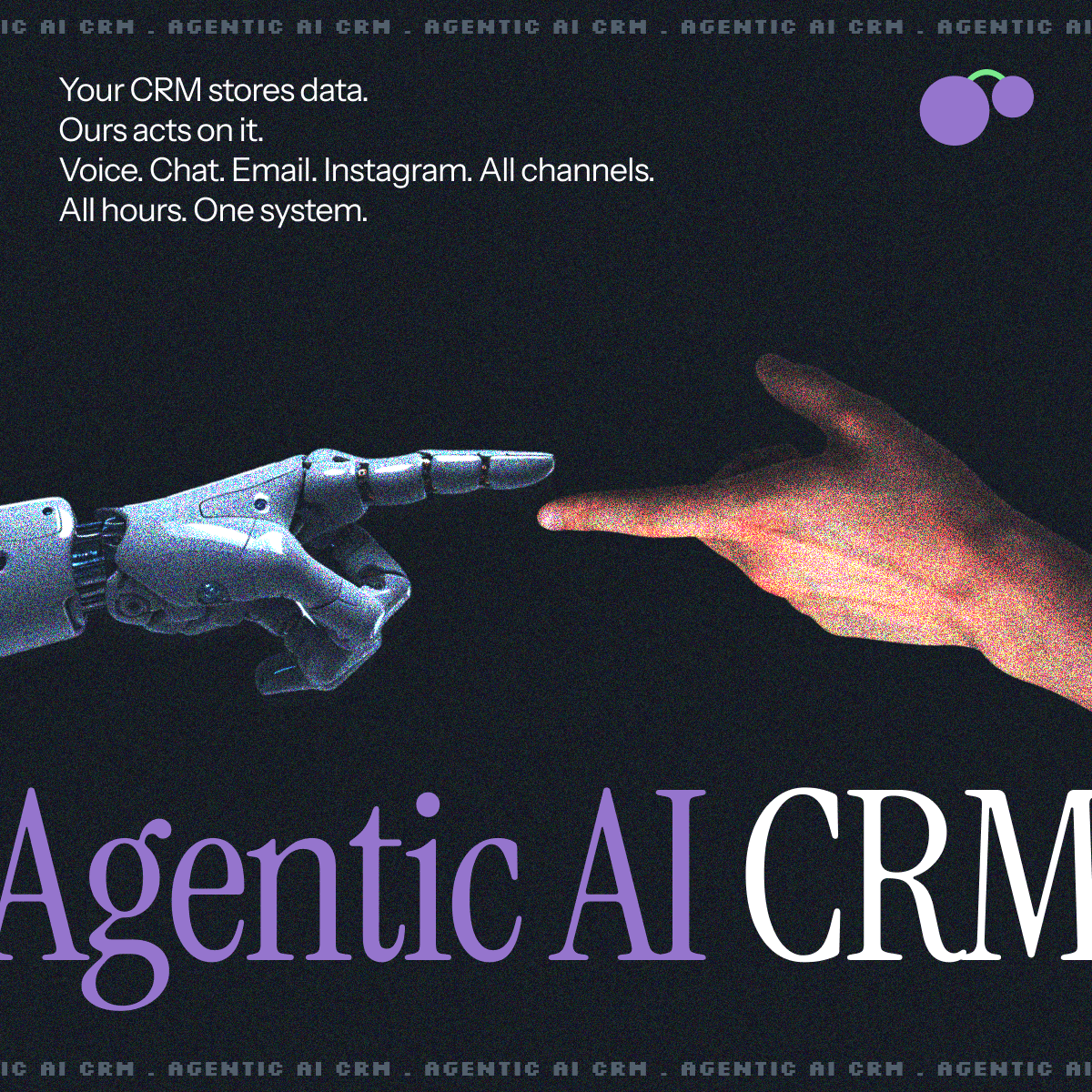
An omnichannel CRM is a platform that connects all your customer communication channels (voice calls, messaging apps, Instagram, email, web chat) to a centralised customer database and automation layer. It enables you to:
Manage all conversations from a unified dashboard across multiple agents and channels. Automate responses to common queries using AI agents or rule-based flows. Tag, segment, and track customers based on interaction behaviour across channels. Link every interaction (call transcript, chat message, Instagram DM) to CRM data, purchase history, and support tickets. Run outbound campaigns (promotional calls, messages, transactional updates). Measure performance: response time, resolution rate, conversion rate, at channel level.
A basic omnichannel CRM gives you multi-agent inbox and call management. An advanced omnichannel CRM, like what Angoor AI provides, gives you autonomous AI agents that handle entire customer journeys without any human involvement, across voice, chat, and every other channel.
Key Distinction: Basic Omnichannel CRM: Team inbox + basic automation. Manages human agents more efficiently. AI-native Omnichannel CRM (Angoor AI): Autonomous agents that handle sales, support, and remarketing end-to-end across voice calls, messaging, Instagram, email, and web. Humans only involved for edge cases.
The Five Core Use Cases for Omnichannel CRM in B2C
1. Abandoned Cart Recovery
A customer adds items to your cart and doesn't check out. Your CRM detects this event (via Shopify integration or your custom API), waits a defined interval, then triggers a personalised outreach: a message referencing the specific items in the cart, or a Voice AI call for high-value carts. Optionally includes a limited-time discount.
Brands using Angoor AI for abandoned cart recovery report 3 to 5x higher recovery rates than email-based flows, because conversational channels are seen and opened, and Voice AI calls create urgency.
2. Order and Shipment Updates
Proactive order update messages and calls are one of the highest-value omnichannel use cases. Instead of customers creating support tickets asking 'Where is my order?', your AI agent sends automated updates at key milestones: order confirmed, dispatched, out for delivery, delivered. For high-value orders, a Voice AI confirmation call adds a premium touch.
This single automation typically reduces WISMO (Where is my order?) support tickets by 40 to 60%, one of the most common and costly ticket categories for e-commerce businesses.
3. Lead Qualification and Pre-Sales
A potential customer reaches out asking about your product or service. Your AI agent responds immediately (even at 3 AM via chat, or during business hours via Voice AI call), asks qualifying questions in a natural conversational flow, identifies the right product or service match, and either books a demo, completes a sale, or routes to a human salesperson with full context.
For businesses like real estate platforms, this is transformational: leads that previously went cold because of slow response times are now engaged within seconds via chat or within minutes via an AI-powered callback.
4. Post-Purchase Support
Returns, refunds, complaints, product questions: all managed by an AI agent that has access to the customer's order history, previous interactions across all channels, and your return policy. The agent handles straightforward cases autonomously (via chat or self-service voice) and escalates complex cases to humans with full context already compiled.
5. Remarketing and Re-engagement
Omnichannel re-engagement means reaching customers on the channel they respond to best. Some customers respond to messages; others pick up calls. AI determines the optimal channel per customer based on historical response patterns.
Use cases include win-back campaigns for lapsed customers, cross-sell campaigns based on purchase history, loyalty rewards and anniversary messages, and event-triggered outreach (feedback requests after delivery, review requests after use).
Omnichannel CRM Implementation: Step-by-Step
1. Select your omnichannel CRM platform: ensure it supports multi-channel (voice, messaging, Instagram, email, web), AI automation, and deep CRM integration.
2. Connect your communication channels: messaging API, Voice AI / telephony provider, Instagram Business API, email, web chat widget.
3. Connect your existing systems: CRM (Shopify, internal), helpdesk (Freshdesk, Zoho), logistics (Shiprocket, Delhivery, ClickPost).
4. Build your AI agent flows: map out the top 10 conversation scenarios for your business (FAQs, cart recovery, order tracking, returns, etc.) across both text and voice.
5. Configure escalation rules: define when AI hands off to human, with what context, and to which team, for each channel.
6. Set up analytics: track response time, automation rate, resolution rate, and conversion per channel and per flow.
7. Go live and optimise: review weekly, refine AI responses based on conversations and calls that weren't handled well.
Common Pitfalls to Avoid:
1. Using a personal phone number for business calls: you'll hit limits and can't add agents or enable Voice AI.
2. Choosing a basic provider without AI capabilities: you'll outgrow it within months.
3. Not connecting channels to your CRM: defeats the purpose of unified engagement.
4. Neglecting voice as a channel: many B2C customers still prefer calling, especially for high-value or complex queries.
How Angoor AI's Omnichannel CRM Works
Angoor AI's CRM is built AI-natively, meaning the AI agent isn't a feature sitting on top of a human inbox system. It's the primary operational layer, with human agents receiving escalations rather than the other way around.
Key capabilities: Omnichannel context where conversations across voice, chat, email, and Instagram are linked in a single customer profile. Agentic flows where AI agents handle complete customer journeys, not just FAQs, but multi-step processes like property booking, order returns, or lead qualification. Integration depth with direct integrations with Shopify, internal CRM/ERP, Meta (for ad integration), G Suite, Shiprocket, Clickpost, telephony providers, and custom APIs. Voice AI that handles outbound telecalling for lead follow-up, appointment confirmation, and re-engagement. Intelligent re-engagement where the system detects conversation drop-offs and initiates personalised outreach on the channel most likely to get a response. Human-AI collaboration where, when escalated, humans receive full context summaries (including call transcripts), not blank conversations.
Choosing an Omnichannel CRM: What to Look For
When evaluating omnichannel CRM platforms for your B2C business, assess these seven criteria:
1. AI capability: Does the platform support autonomous AI agents or only rule-based flows?
2. Channel coverage: Does it support voice calls (including Voice AI), messaging, Instagram, email, and web chat natively?
3. Integration depth: Can it connect to your existing CRM, helpdesk, and logistics APIs?
4. True omnichannel: Is context shared across all channels or is each channel a silo?
5. Implementation speed: How long does full deployment take?
6. Analytics: Does it provide channel-level and cross-channel performance reporting?
7. Pricing model: Per conversation, per agent, or per interaction? Understand the unit economics for your volume.
Frequently Asked Questions
Q: Is voice/telecalling really still important for B2C in 2026-27?
A: Absolutely. For high-value transactions (real estate, insurance, luxury goods), complex support issues, and older demographics, voice remains the highest-trust channel. Voice AI has made outbound calling scalable without proportional headcount increases. The best B2C engagement strategies use voice alongside chat and social, not instead of them.
Q: Is an omnichannel CRM compliant with GDPR in the UK?
A: Yes, if implemented correctly. Customers must opt in to receive business messages and calls. Your data must be stored in GDPR-compliant infrastructure. Angoor AI's platform is built for both Indian and UK market compliance requirements.
Q: Can an omnichannel CRM handle 1,000+ daily interactions?
A: Yes, that's the core use case. Insta Astro handled 40k+ daily interactions at peak season using Angoor AI's platform with zero performance degradation, across web, chat, email, whatsapp, instagram and voice channels.
Conclusion
The era of single-channel customer engagement is over. B2C brands in India and the UK need an omnichannel CRM that's AI-native, deeply integrated with their existing stack, and capable of autonomous agent operation across voice calls, messaging, Instagram, email, and web. That's the difference between a platform that scales your business and one that creates more operational chaos than it solves.
See Angoor AI's omnichannel CRM in action.
Book a free demo at angoor.ai/demo-page
Arpit Agrawal
Chief Executive Officer
Subscribe to our mailing list
We won't spam, just notifications when we are putting out something important.